
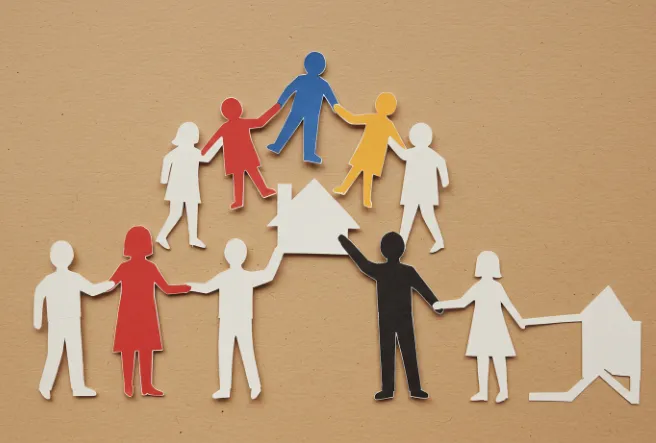
Belonging Before Agreement: Building Communities That Honour Dignity Without Demanding Conformity
Creating spaces where people can disagree and remain connected through shared humanity
I sat in a circle of twenty people, most of whom I had never met before. We had gathered to discuss Palestinian liberation, a topic that tends to fracture relationships and explode communities faster than almost any other issue.
Within the first ten minutes, someone said something I fundamentally disagreed with. My entire body tensed. My mind began composing the perfect response that would correct their perspective and prove my point. I could feel the familiar pattern activating: the need to establish who was right, who truly understood, who deserved to be in this space.
Then the facilitator did something that changed everything. Before allowing anyone to respond to the comment, she invited us to pause and place our hands on our hearts. She asked us to remember that every person in the circle shared something more fundamental than any difference in political analysis: we were all human beings who cared enough about Palestinian liberation to show up on a cold evening when we could have stayed comfortable at home.
In that pause, something shifted. The tension in my chest softened slightly. My need to correct and dominate the conversation loosened its grip. I could suddenly see the person who had spoken not as an opponent to defeat but as a fellow human being trying to understand complicated realities whilst carrying their own wounds, conditioning, and limitations.
When the conversation resumed, it was different. People still disagreed, sometimes passionately. But underneath the disagreement was something solid: recognition of shared humanity, mutual respect for the courage it took each person to be present, acknowledgement that we were all doing our imperfect best to serve justice.
This was my first experience of what I have come to call belonging before agreement. And it revolutionised how I understand community, activism, and the possibility of connection across difference.
The Conventional Model: Agreement as Prerequisite
Most communities form around agreement. You find people who share your beliefs, values, politics, religion, or lifestyle choices. You create boundaries that exclude those who think differently. You maintain cohesion through enforcing conformity and punishing deviation.
This model makes logical sense. How can you build community with people whose fundamental beliefs contradict yours? How can you create safety when difference threatens group harmony? How can you work toward shared goals when you disagree about basic principles?
These questions seem to demand that agreement must precede belonging. You must establish what everyone believes before you can determine who belongs in the community.
But this conventional model creates profound problems that limit community capacity for transformation, resilience, and genuine connection.
The Echo Chamber Effect
“The more amiability and esprit de corps among the members of a policymaking group, the greater is the danger that independent critical thinking will be replaced by groupthink.”(Irving Janis).
Everyone confirms everyone else's beliefs. Dissent is suppressed or expelled. The community becomes intellectually and emotionally stagnant.
I watched this dynamic play out repeatedly in activist spaces. Groups would form around specific analyses of Palestinian liberation. Anyone who questioned that analysis, who brought different perspectives or challenged sacred assumptions, would be marginalised or pushed out. The remaining members would congratulate themselves on their ideological purity whilst the community became smaller, more rigid, and less effective.
This is not a transformation. This is calcification masquerading as solidarity.
The Purity Spiral
What begins as shared principles becomes increasingly narrow definitions of acceptable belief and behaviour. People compete to demonstrate their purity through ever more rigid adherence to community orthodoxy.
I experienced this personally in spaces where supporting Palestinian liberation required adopting specific positions on every tangentially related issue. If you cared about Palestinian children, you must hold particular views about fifteen other topics. Any deviation from the complete package was evidence of insufficient commitment or hidden complicity.
This dynamic destroyed more communities than any external opposition ever could.
The Fragility of Agreement
Communities based purely on agreement are inherently fragile because people change, circumstances evolve, and understanding deepens. When belonging depends on maintaining specific beliefs, members face an impossible choice: suppress their authentic growth to maintain belonging, or leave the community when their perspectives shift.
I cannot count how many people I have watched leave activist communities, not because they stopped caring about justice, but because their understanding evolved in ways the community could not tolerate. These losses impoverish everyone. The community loses valuable members. The departing individuals lose community support during vulnerable transitions. Collective wisdom decreases rather than grows.
The Ubuntu Alternative: Belonging as Foundation
Ubuntu philosophy offers a radically different approach: I am because we are. Your belonging is not conditional on agreement. Your belonging exists because you are human. Your existence is inherently interconnected with all other existences, because your humanity cannot be separated from collective humanity (Tutu, 1999).
This recognition transforms everything about how communities can form and function.
Dignity as Entry Point
When belonging precedes agreement, the entry point to community becomes dignity rather than doctrine. You belong because you are a human being worthy of respect, care, and inclusion. Your worthiness is not something you earn through correct beliefs or appropriate behaviours. Your worthiness simply is.
This does not mean communities have no boundaries or standards. It means the boundaries serve protection and purpose rather than ideological gatekeeping. You can exclude behaviours that harm while including humans who struggle with those behaviours. You can maintain clear values whilst recognising that people embody those values imperfectly.
In Palestinian solidarity communities that operate from belonging before agreement, the question is not "Do you hold the correct analysis of Zionism?" The question is "Are you willing to learn, to listen to Palestinian voices, to examine your assumptions, and to act from increasing consciousness even whilst your understanding remains incomplete?"
This shift creates completely different community dynamics.
Difference as Resource
When belonging is secure, difference becomes a resource rather than a threat. People with different perspectives, experiences, backgrounds, and analyses can contribute to collective wisdom without needing to suppress their uniqueness (Page, 2007).
A Palestinian solidarity community that includes Palestinians from various political traditions, allied Jews struggling with Zionist conditioning, Christians learning about complicity in Christian Zionism, Muslims processing complex relationships between religious and national identity, and secular activists bringing different frameworks, this diverse community has access to a far richer understanding than any ideologically pure group.
But this richness only becomes available when people feel secure in their belonging despite differences. When belonging depends on agreement, people hide or suppress perspectives that might threaten their inclusion. When belonging is foundational, people can risk authentic sharing that serves collective growth.
Conflict as Opportunity
Perhaps most radically, when communities operate from belonging before agreement, conflict becomes an opportunity for deeper connection rather than a crisis threatening community existence (Lederach, 2003).
In conventional communities, conflict is terrifying because it might expose differences that should not exist within the group. People avoid difficult conversations or handle them poorly because disagreement threatens the agreement-based foundation of belonging.
In Ubuntu communities where belonging is secure regardless of agreement, people can engage in conflict with curiosity rather than fear. "We disagree about this strategy for Palestinian liberation. Let us explore our different perspectives with genuine interest in understanding each other rather than defensive protection of our positions."
This does not guarantee an easy resolution. It creates conditions where transformation through relationship becomes possible.
Implementing Belonging Before Agreement
Understanding the principle is easier than embodying the practice. Most of us carry deep conditioning that equates belonging with conformity. Creating communities that honour belonging before agreement requires specific practices, structures, and commitments.
Establishing Clear Shared Commitments
Belonging before agreement does not mean agreeing about everything means nothing. It means distinguishing between core commitments that define community purpose and everything else, where diversity serves collective wisdom.
For Palestinian solidarity communities, the core commitment might be: "We are dedicated to Palestinian liberation, dignity, and justice. We commit to centring Palestinian voices, examining our biases and privilege, and taking action that serves collective freedom."
Notice what this commitment does and does not include. It establishes purpose and values without prescribing specific analyses or strategies. It creates space for Palestinians with different political perspectives. It welcomes allies at different stages of learning. It focuses on orientation and action rather than ideological purity.
Beyond this core commitment, everything else becomes subject to exploration, dialogue, and collective discernment rather than litmus tests for belonging.
Creating Brave Spaces
Belonging before agreement requires what some educators call brave spaces rather than safe spaces (Arao & Clemens, 2013). Safe space language can create impossible expectations that no one will ever feel uncomfortable or challenged. Brave space language acknowledges that meaningful growth requires discomfort, whilst committing to making that discomfort productive rather than traumatising.
Brave spaces include:
Clear communication agreements that establish how people will engage when conflict emerges: speaking from personal experience rather than making sweeping generalisations, using "I" statements rather than "you" accusations, and committing to stay present rather than storming out when challenged.
Skilled facilitation by people trained in holding complexity, managing group dynamics, and interrupting harmful patterns without shaming participants. This facilitation helps communities navigate difficult territory without collapsing into chaos or suppression.
Structured opportunities for people to share their experiences and perspectives without immediate challenge or debate. Sometimes people simply need to be heard and witnessed before dialogue can occur.
Repair processes that acknowledge when harm happens and create pathways for restoration without requiring perfection or permanent exile for those who cause harm while learning.
Regular reflection on how the community is functioning, what is working, what needs adjustment, and how power dynamics are operating within the space.
These elements do not guarantee ease, but they create conditions where belonging can remain secure whilst people engage in genuine differences.
Developing Relational Capacities
Belonging before agreement demands specific skills that most people never learned in families, schools, or workplaces designed around hierarchy and conformity rather than connection and complexity.
Generous listening means hearing others not to formulate responses but to genuinely understand their experience. This requires temporarily suspending your own perspective to enter another person's reality with curiosity rather than judgment (Palmer, 2004).
I had to learn this capacity painfully. My conditioning told me that listening without immediately challenging meant agreement. I had to discover that you can fully hear someone's perspective, understand why they hold it, and honour their humanity whilst still disagreeing with their conclusions.
Distinguishing identity from opinion allows you to recognise that someone's views on complex issues reflect only one aspect of their being rather than their entire humanity. A person's analysis of Palestinian liberation strategies does not define whether they deserve belonging, care, and respect.
This distinction became crucial for me when working with people whose politics I found problematic. I had to practice seeing them as complete human beings carrying wounds, conditioning, gifts, and limitations rather than reducing them to their worst political takes.
Managing reactivity through practices that create a pause between triggering and responding. When someone says something that activates your defensive patterns, can you notice the activation without immediately acting on it? Can you take three breaths before speaking? Can you check your body and emotions before engaging?
I use EFT tapping in moments of high reactivity within community settings. Tapping specific acupressure points whilst acknowledging difficult emotions creates enough nervous system regulation that I can respond consciously rather than react automatically (Church, 2013).
Holding complexity means resisting binary thinking to embrace the reality that most situations contain multiple valid perspectives. You can acknowledge that someone's concern is real whilst also recognising that other concerns are equally valid and may conflict with the first concern.
Palestinian solidarity work continuously demands this capacity. You must hold that Palestinian liberation is non-negotiable whilst recognising that people arrive at solidarity through different pathways and will express it through different strategies. You must maintain a clear commitment to justice whilst acknowledging that tactics, language, and priorities will vary across diverse communities.
Learning from Palestinian Community Practice
Palestinian communities worldwide demonstrate belonging before agreement despite enormous pressures toward fragmentation. Military occupation, forced displacement, and systematic attempts to divide Palestinians have created conditions where ideological purity would guarantee collective destruction.
Instead, Palestinian solidarity encompasses communists and capitalists, secular activists and religious communities, militants and pacifists, traditionalists and progressives. This diversity is not a weakness. This diversity is a strength that has enabled Palestinian survival and resistance across seventy-five years of attempted elimination (Barghouti, 2003).
What unites these diverse expressions is not identical analysis but shared commitment to dignity, justice, and liberation. Palestinians embody belonging before agreement because their collective survival depends on it. The lesson they offer is profound: when you face an existential threat, ideological purity becomes a luxury you cannot afford. What matters is whether people show up, contribute what they can, and remain committed to collective freedom.
This does not mean Palestinians never experience internal conflict or that all Palestinian organising exemplifies belonging before agreement. It means that the most resilient Palestinian movements prioritise relationship and solidarity over rigid conformity.
Navigating Genuine Harm
Belonging before agreement is not naive inclusion that tolerates abuse or harm in the name of radical acceptance. Clear boundaries remain essential, but they focus on behaviour rather than belief, on impact rather than ideological deviation.
Distinguishing Discomfort from Harm
Not everything that makes you uncomfortable constitutes harm requiring intervention. Sometimes discomfort signals growth, indicating that your assumptions are being challenged in productive ways (DiAngelo, 2018).
I had to learn this distinction personally. When people questioned my perspectives on Palestinian resistance strategies, my initial response was defensive outrage. I experienced their questions as attacks on my Palestinian identity and commitment to liberation. But when I examined my reactions honestly, I recognised the discomfort stemmed from having my assumptions challenged rather than from actual harm being enacted.
This recognition allowed me to stay present with difficult conversations rather than shutting them down or leaving in defensive protection.
Addressing Actual Harm
When someone's behaviour genuinely harms others through racism, sexism, homophobia, transphobia, or other forms of dehumanisation, belonging before agreement does not mean tolerating that harm. It means addressing the harm whilst maintaining the person's fundamental humanity.
This might mean: "Your comment about Palestinian culture was Orientalist and caused harm to Palestinians in this space. We need you to listen to how your words impacted people, to examine the assumptions underlying them, and to commit to different behaviour going forward. Your belonging in this community remains secure whilst we work through this repair process together, provided you engage that process with genuine openness."
This approach differs radically from immediate expulsion, which treats harm as evidence of irredeemable character rather than as behaviour that can change through consciousness and community support.
When Belonging Becomes Impossible
Sometimes people demonstrate through repeated behaviour that they cannot or will not engage in community commitments regardless of support offered. Someone might consistently violate communication agreements, refuse accountability when causing harm, or use community access to exploit or manipulate others.
In these situations, belonging before agreement does not demand that communities maintain relationships that enable ongoing harm. It means the decision to end someone's participation focuses on behaviour patterns and community sustainability rather than ideological disagreement.
"We are ending your participation in this community not because you hold different views about Palestinian liberation strategies but because you have repeatedly violated our communication agreements, refused repair processes, and used this space to harm other members despite multiple attempts to support different behaviour."
This distinction matters enormously for maintaining belonging before agreement whilst protecting community wellbeing.
The Ubuntu Vision of Human Community
Belonging before agreement ultimately serves a vision larger than any individual community. It points toward the possibility of human society organised around recognition of inherent interconnection rather than competitive separation (Tutu, 1999).
What becomes possible when entire societies operate from the understanding that everyone belongs because everyone is human? When social institutions prioritise dignity over conformity? When do economic systems recognise that individual well-being depends on collective well-being? When political structures centre the relationship over domination?
This is not utopian fantasy. This is the Ubuntu consciousness that indigenous cultures worldwide have maintained despite colonisation, that resistance movements embody when they refuse to dehumanise their oppressors even whilst fighting oppression, that ordinary people practice daily when they choose connection over separation.
Palestinian liberation movements that include allied Jews demonstrate this possibility. Abolitionist communities that include people who have been incarcerated alongside people who worked in carceral systems demonstrate this possibility. Environmental movements that include indigenous wisdom-keepers alongside scientists demonstrate this possibility.
Each community that prioritises belonging before agreement becomes a laboratory for social transformation, demonstrating that humans can relate across profound differences whilst maintaining clear values and taking collective action.
Your Role in Creating the Ubuntu Community
You do not need to create perfect communities that embody belonging before agreement flawlessly. You need to begin practising these principles wherever you already are, with whatever relationships and communities you already participate in.
In your family, can you maintain a connection with relatives whose politics differ from yours, whilst also maintaining clear boundaries about what behaviour you will and will not tolerate in your presence?
In your workplace, can you see colleagues whose approaches frustrate you as complete human beings doing their imperfect best rather than as obstacles to overcome?
In your activist spaces, can you create room for people at different stages of consciousness to contribute what they can rather than demanding everyone meet identical standards of awareness?
In your neighbourhood, can you build relationships with people whose lifestyles, beliefs, and values differ from yours, whilst also maintaining your authentic expression and clear commitments?
Every choice to prioritise belonging before agreement in your existing relationships and communities creates ripples that extend far beyond what you can see. Every moment you maintain a connection whilst navigating different models, possibility for others. Every practice you develop contributes to the collective capacity for Ubuntu consciousness.
This is the revolution: not overthrowing systems from outside but transforming relationships from within, creating communities where belonging precedes agreement and where difference enriches rather than threatens collective wisdom.
Your community is waiting for you to remember what humanity has always known beneath the conditioning of separation: we belong to each other not because we agree about everything but because we share the fundamental reality of being human, of being alive, of being here together on this planet in this unprecedented moment.
The question is not whether you agree with everyone. The question is whether you can remain connected through shared humanity whilst navigating genuine difference.
That choice creates communities capable of transformation. That choice embodies Ubuntu. That choice changes everything.
References
Arao, B., & Clemens, K. (2013). From safe spaces to brave spaces: A new way to frame dialogue around diversity and social justice. In L. M. Landreman (Ed.), The art of effective facilitation: Reflections from social justice educators (pp. 135-150). Stylus Publishing.
Barghouti, M. (2003). I saw Ramallah. Anchor Books.
Church, D. (2013). Clinical EFT as an evidence-based practice for the treatment of psychological and physiological conditions. Psychology, 4(8), 645-654. https://doi.org/10.4236/psych.2013.48092
DiAngelo, R. (2018). White fragility: Why it's so hard for white people to talk about racism. Beacon Press.
Lederach, J. P. (2003). The little book of conflict transformation. Good Books.
Mounk, Y. (2022). The identity trap: A story of ideas and power in our time. Persuasion.
Page, S. E. (2007). The difference: How the power of diversity creates better groups, firms, schools, and societies. Princeton University Press.
Palmer, P. J. (2004). A hidden wholeness: The journey toward an undivided life. Jossey-Bass.
Sunstein, C. R. (2017). #Republic: Divided democracy in the age of social media. Princeton University Press.
Tutu, D. (1999). No future without forgiveness. Doubleday.
If you are seeking a community where you can bring your full, authentic self, where belonging is secure whilst growth remains possible, where difference enriches rather than threatens collective wisdom, I invite you to explore the Ubuntu communities I facilitate. We are creating spaces where people can disagree and remain connected through shared commitment to dignity, justice, and collective liberation.